Kandyan Dances
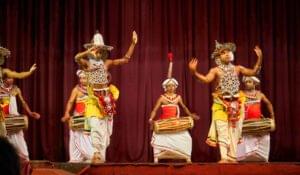
The Kandyan, or up-country (udarata natum), dances, are regarded as the classical dance tradition of Sri Lanka. Kandyan dancers are traditionally performed only by male dancers. The technique, partly derived from South India, focuses on dynamism, powerful footwork, leaps and whirls. It has a vast repertoire, partly originating from an ancient indigenous ritual dance, partly influenced by South Indian dances.
Kandyan dances are now probably the country’s most important cultural export. However, the most spectacular performances can still be seen in a religious context, particularly during the annual Kandy Perahera procession in the city of Kandy.
The ves costume, the common dance costume for most of the Kandyan dances, consists of a large white loincloth, which is wrapped to form a kind of pair of loose trousers. The upper body is bare, except the large breast ornament, a kind of beaded net, constructed of small seashells and silver beads. The arm and shoulder decorations are also made of silver, like the impressive tiara-like headgear with its large ear ornaments.
According to studies on visual sources, it is believed that the outfit was simpler in older times. In the earliest relief showing a Kandyan dancer, the tiara was in the form of a naga snake. Now the tiara has seven protruding “leaves” or “flames”. It was during the two last centuries that the outfit gradually got its present, spectacular shape.
The costume with its ornaments was originally regarded as sacred and kept in a temple. There are still many magical beliefs connected to it. The ves crown, in particular, has been venerated and until rather recent times a dancer was allowed to wear it only after a ceremony (ves mangalya) in which he was initiated and blessed as a mature dancer.
Date: Mon, 14 Apr, 2025
Where: Throughout Sri Lanka
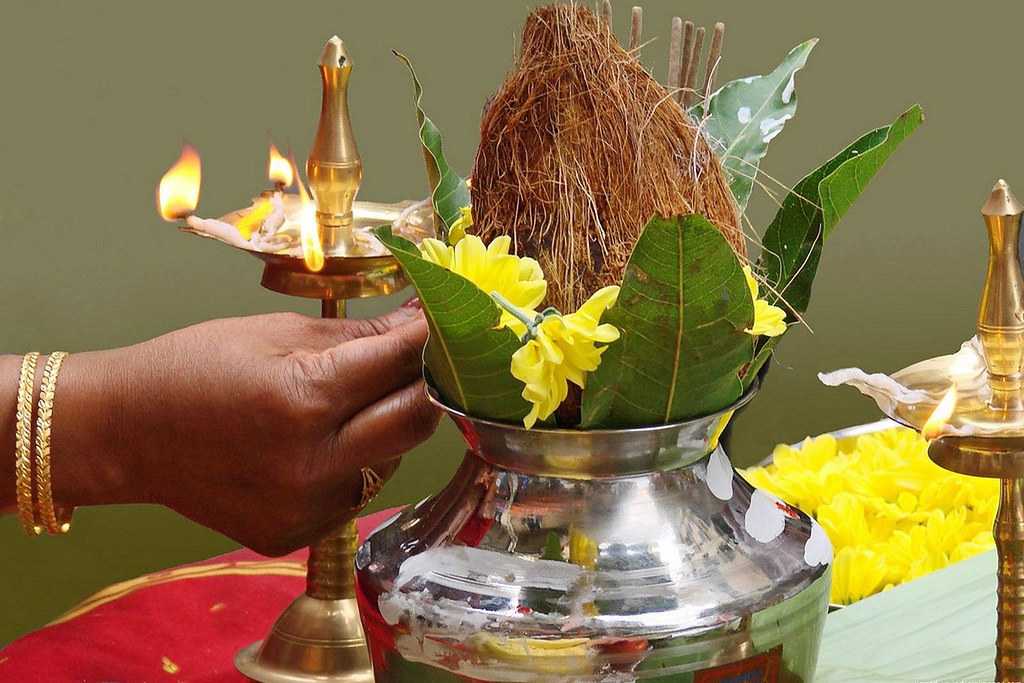
Marking the end of the harvest season, Sri Lanka celebrates its new year also known as Aluth Avurudda. The people in Sri Lanka think that the Prince of Peace, Indradeva, comes down to earth to bless the people with happiness and peace; thus, this is also the time for a change of thoughts. Both Sinhalese, as well as the Tamil people in the country have their rituals, such as the playing of a Raban, a drum, by women in the community, preparing Kiribath ( a rice preparation in milk), Kavum (an oil cake) and Kokis (a sweetmeat snack). The date of the auspicious new year gains its significance through astrological calculations.
This festival generally happens mid-April when the entire country is brought together in a festive spirit. The festival is one of the biggest or the biggest celebrations in Sri Lanka, as it signifies the end of the harvest season or spring. During the festival, people ensure their houses are clean, purchase new clothes, and prepare many traditional sweets. The celebrations also have the children applying herbal oils to remove any negative spirits. Locals tend to burst firecrackers and organize competitive games for everyone to participate. This festival promotes togetherness and forges bonds with people from all religions. It is celebrated either on the 13th or 14th of April every year.
Date: Mon, 14 Apr, 2025
Where: Throughout Sri Lanka
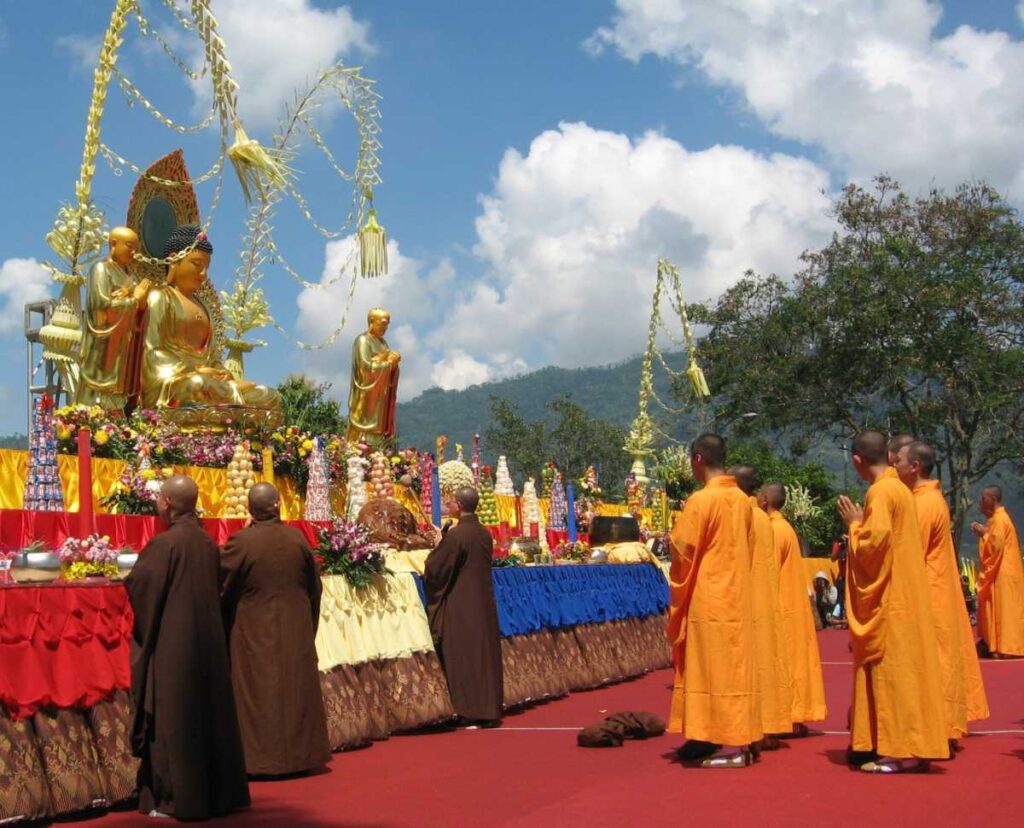
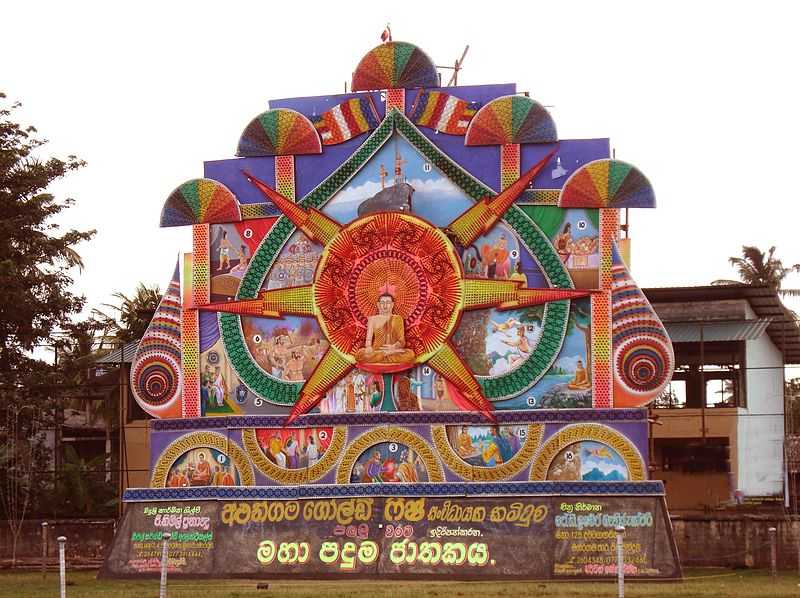
A renowned festival in Sri Lanka, Vesak Poya commemorates the three crucial milestones in Buddha’s life: birth, enlightenment, and nirvana. Vesak Poya is considered one of the most important Buddhist festivals in Sri Lanka and is celebrated in the first week of May. The celebrations begin on the full moon day and continue for a week, where every corner has magical and colorful lanterns called Vesak Kudu, which depict Buddha’s light.
Well-lit pandals illuminate places like Colombo and Kandy, which have artwork from the Jataka stories, whereas the villagers and townspeople light up their homes with clay diyas for the Sri Lank Vesak. The festival takes place across the island, with the grander celebrations happening in the capital city of Colombo. The festival brings many cultural events showcasing Buddhist history about the three stages of ‘Buddha’s life. The festival engulfs the country with joy and is the best time to experience Buddhist culture. Vesak day is also the most significant Buddhist festival celebration in Southeast Asia. This festival takes place throughout May.
Date: Mon, 12 May, 2025
Where: Celebrated throughout Sri Lanka but on a larger scale in Colombo
Noted to be the second most important Buddhist holiday among the festivals in Sri Lanka, celebrated annually, Poson Poya is the occasion to celebrate the arrival of Buddhism in Sri Lanka. Like Vesak celebration, Poson also has lantern lighting, thorana decoration and food stalls as an integral part. Buddhist disciples dress up in white and indulge in various religious activities, of which climbing the steps of the Mihintale Rock is an important part.
Date: Tuesday, 10th of Jun
Where: Anuradhapura and Mihintale
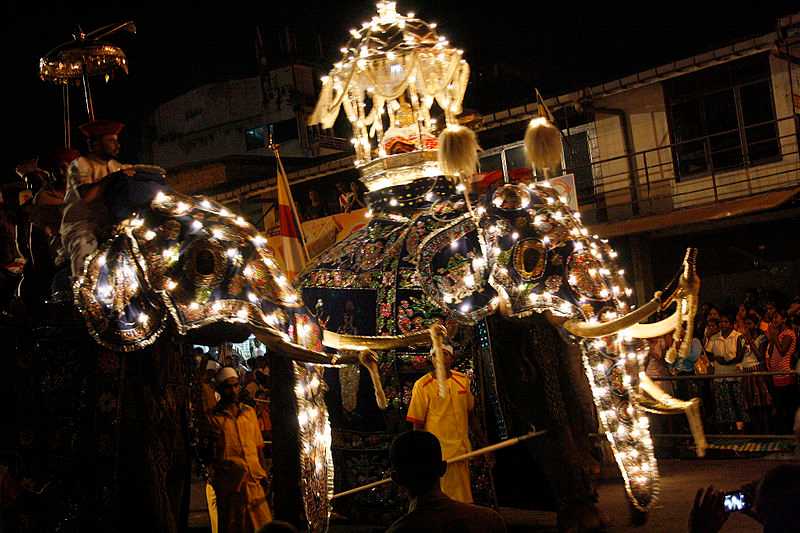
Kandy Esala Perahera is also called the festival tooth, a celebration across Sri Lanka. It is celebrated by more than just Buddhists, as the festive performances bring people together. The festive celebrations go on for ten days in either the month of July or August. The festival happens in Esala (July or August), which is the month that is believed to celebrate the first teaching given by Buddha after he attained enlightenment.
The Kandy Perahera starts with the Kap Situveema or also called the Kappa, in which a blessed young Jackfruit tree is rooted and is re-planted. The in vicinity of each of the four Devales is dedicated to the four guardian gods, Natha, Vishnu, Kataragama and the goddess Pattini. Multiple processions are involved in this festival:
a. Kumbal Perahara: This is the first procession of Tooth Relic, which starts with the Kumbal Perahera, also called the Kumbal Procession. The first Kumbal Perahera is shown to infants so that it can drive away Evil Spells and ill will. It is a tradition that the ceremony parades the streets for five days.
b. Randoli Perahera: It is also known as the Randoli Procession and can be seen only with the procession of the Sacred Tooth Relic for five days every year in Kandy.
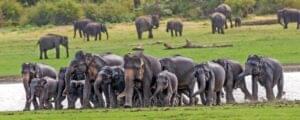
c. Maha Randoli Perahera is also known as the Grand Randoli Procession. The Maha Randoli Perahera is the final procession of the festival. It is the grandest procession of the festival. The elephants come with a garland and are decorated with gold and red-stitched costumes.
Date: July 30 to August 9
Where: Kandy

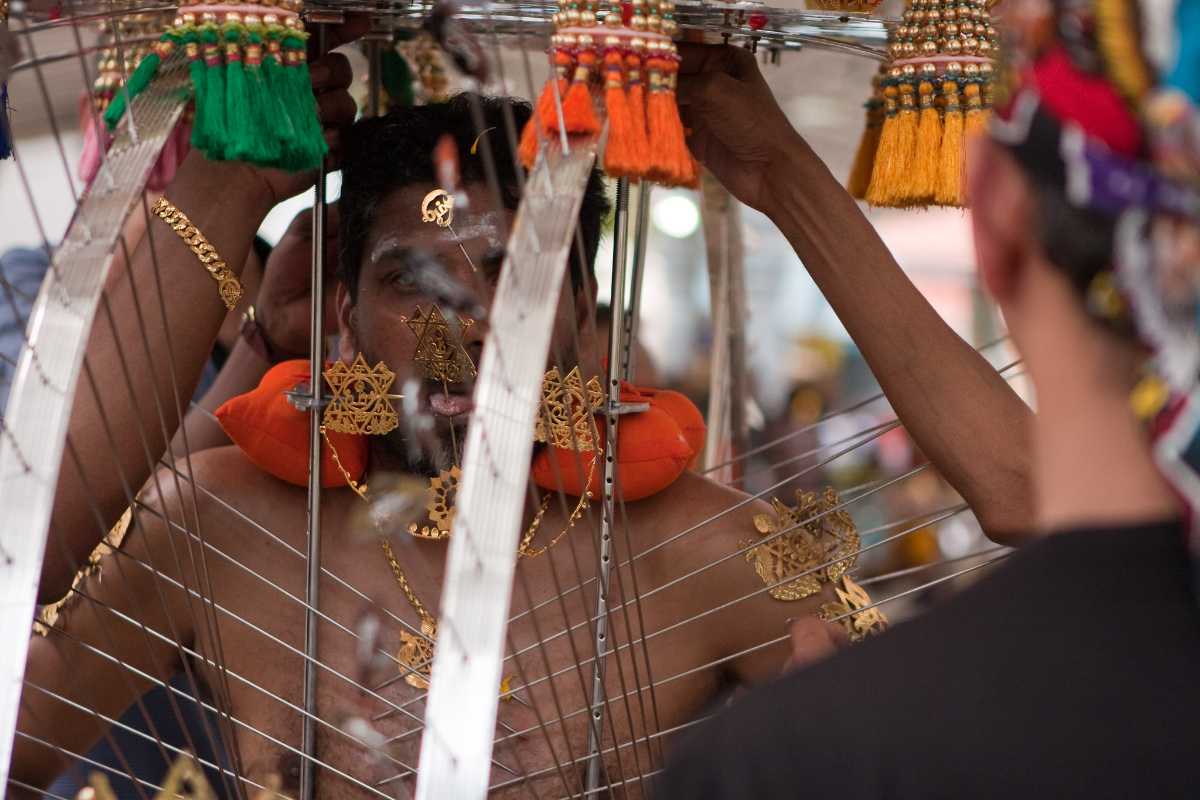
With celebrations lasting for over two weeks, this Hindu festival attracts visitors in large numbers to Kataragama town in southern Sri Lanka. People of different religious faith seek atonement through means of self-mutilation and piercings. The festive enthusiasm is high and can be seen more pronounced in the processions of musicians, lavishly garmented elephants, dancers, acrobats and fire-eaters. As a part of the parade, some devotees also walk on fire. Devotees also offer garlands of red flowers to Skanda, the son of Shiva.
Date: July 27, 2025
Where: Kataragama town
It is one of the most important Hindu and cultural events in Sri Lanka. The festival is significant for the war-god Skandha and his trident (Vel). The Vel is paraded in a massive golden chariot pulled by white people who apply holy ash to their face to start the ceremony. Dancers, elephants and musicians accompany the procession as it moves through the city, the people of Sri Lanka can hear religious songs, bells and drums through the streets. The beautiful parade and music are going to leave you wanting more. This festival happens through July or August every year in Colombo.
This festival is a celebration of Lord Skanda’s victory over the demons and also honours his sacred trident known as Vel. The devotees with ash-smeared faces pull the spectacular golden chariot where the Vel is placed, and the procession makes its way around the city. The parade’s starting point is the Sea Street Temple in the Pettah district to end at the temple in Wellawatta or Bambalapitiya. The drummers, dancers, elephants, chants and bells fill the streets and are sure to be an exciting watch to anyone who is visiting the country.
Date: July 27, 2025
Where: Colombo

Popularly known as the Festival of Lights, Deepavali is a Hindu festival that renounces the victory of evil over good. The Tamil community in Sri Lanka celebrates Deepavali with great splendour by lighting lamps, bursting firecrackers, singing, dancing, wearing new clothes, visiting Hindu temples, exchanging gifts and meeting their loved ones over lavish meals. The idea behind lighting oil lamps is to seek blessings from the Goddess Lakshmi (goddess of wealth).
Date: Mon, 20 Oct, 2025 – Wed, 22 Oct, 2025
Where: Throughout the island

This festival in Sri Lanka marks the beginning of the Buddhist New Year and is known for one of the country’s largest and most beautiful processions. Duruthu Perahera commemorates Buddha’s first visit to Sri Lanka 2500 years ago. The pilgrimage to Adam’s peak for a period three months also starts with this festival. The vibrant procession of the Kelaniya Raja Maha Viharaya is one that flaunts the country’s festive glamour. While the Perahera on the first day with less number of participants is called the Uda Maluwe Perahera, the grandest affair on the last day is Randoli Perahera. The three-day-long full display by the drummers, dancers, elephants and acrobats render a majestic vibe to the festival.
Date: Monday, January 13
Where: Colombo
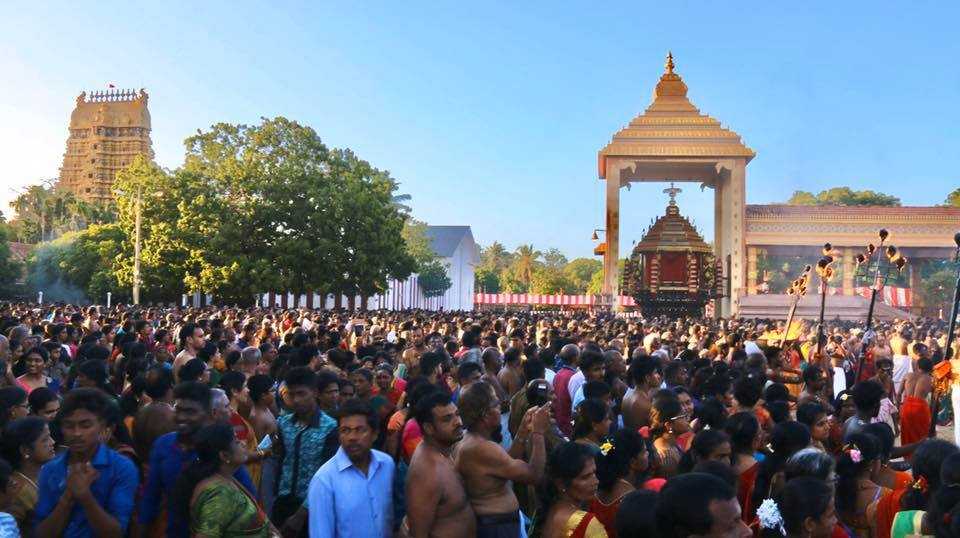
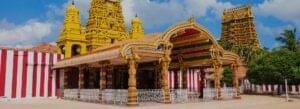
Another grand occasion that involves a 25-day long festivities as a tribute to Lord Murugun, Nallur Festival, sees people from all over the country gathering at the Nallur Kandaswamy Kovil. The deity seated in a bedazzling silver throne is carried in a gigantic chariot by the devotees chanting “Aro Hara” around the town to mark the festival and showcase the devotion for Lord Murugun. Special ceremonies or poojas take place during the Nallur Festival.
Date: Full moon in January for 25 days
Where: Jaffna

According to the Tamil calendar, Thai Pongal is celebrated in the tenth month Thai on its first day. Thai Pongal is celebrated to offer prayers to the Surya, the Rain God Indra and the cattle for a good harvest. Using rice paste or powder, Kolams or Rangolis are drawn in front of the houses. The first harvest from the paddy fields is prepared with rice, jaggery and milk. The boiling preparation, when over-turned, is said to determine the course of luck for the remaining year.
Date: Tue, 14 Jan, 2025 – Fri, 17 Jan, 2025
Where: Throughout the island
Need help? Our team is just a message away